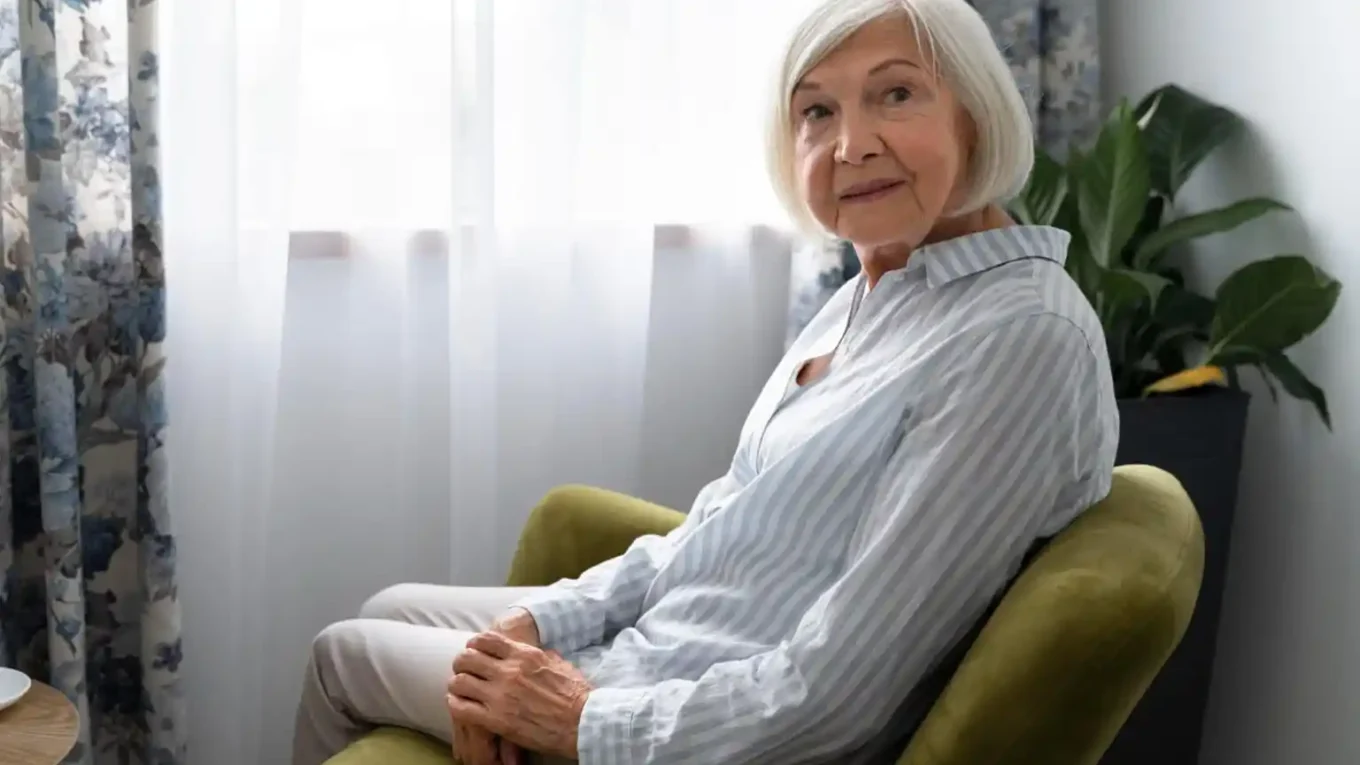
My Daughter Thought She Had Taken Every Dollar but Her Transfer Triggered My Final Plan
When the Time Comes for Eleanor
The thing that no one tells you about losing a forty-three-year husband is that the grief comes in the wrong sequence.

Arthur passed away on a Tuesday in March. The big waves appear later.
The little things, the particular, commonplace routines of a shared life that carry on after the person is gone, are what strike first.
Before I noticed, I made coffee every morning for two people for eleven days. I poured out the cold coffee on his side and started another full pot the following morning.
When Sarah arrived to inform me that the money had vanished, his spectacles were still on the study desk.
Since the glasses are the detail I keep thinking about, I want to state that clearly at the outset.

I had spent forty years picking them up from wherever he had left them and bringing them to him without commenting, a small and daily act of love that I had not recognized as love while I was doing it and fully recognized the moment he was gone to lose them.
Arthur had only needed them for reading, and he had spent forty years setting them down in the wrong place and spending ten minutes looking for them.
The night before he was too exhausted to read, he had placed them on the desk.
They hadn’t been moved by me.
In the final two months of her father’s life, Sarah visited three times.
Three times, there were weekly visitors from other families, smaller families, and less intimate families. I’m not saying this to criticize her.
I say this because it is true and because I was not ready to face it head-on during those months.
Instead, I focused on the medications, the appointments, and the nights when Arthur pretended the pain wasn’t as bad as it was so I could go to sleep.
Every time, Patrick accompanied her.
He was a man who asked questions in the specific register of someone gathering information rather than looking to connect, and he stood too close to desks.
I sat in the front row with Arthur’s wedding ring in my closed hand during the funeral, and I thought that Sarah had shed more tears in the church than at his bedside. He held Sarah while she sobbed loudly, like someone playing grief for a room.
I ignored the idea.
A mother defends her child’s reputation. Like the hand reaching out to catch a falling object, it is reflexive. Before you decide to, you do it.

In the weeks following the funeral, Sarah developed the particular attentiveness of those who have determined that being attentive is the most effective approach to achieve their goals.
She frequently visited, always accompanied by Patrick, carrying documents, papers, and legalese that flowed too quickly for a woman sitting in a home that still smelled like her husband’s aftershave.
“We want to make sure you’re safe, mom.”
“Some loose ends were left by Dad.”
“Patrick is acquainted with individuals who comprehend these concepts.”
I was worn out. At seventy-one, I had just buried the guy who had guided my life for forty years, and I was sitting in rooms filled with his belongings, trying to recall how to want breakfast.
I signed these documents after Sarah showed them to me and explained that they were authorization forms for the joint account Arthur had formed two years prior.
I didn’t read every word.
Three months before to his death, Arthur had assured me that money would reveal things that love had been concealing.
I told him not to talk like that since we were on the back porch and it was the kind of night that makes you think nothing negative can last very long. He gave me a mournful expression that I did not comprehend at the time.
“I hope you’re correct,” he remarked. But don’t freak out if I’m correct. Simply observe.
He was aware.
He had prepared, which is what a man like Arthur did when he loved someone and feared for them at the same time.
Despite this, he had known and loved her all the way to the end, just like parents do.
Two weeks after I signed the paperwork, Sarah arrived.
Without waiting for an invitation, Patrick followed her inside. They arrived to reveal the terms while sitting on my sofa in the composed manner of those who have already reached an agreement.
Sarah’s legs were crossed, her purse resting on her lap, and there was a brilliance in her eyes that I was either unaware of or had refused to acknowledge.
“Mom, the money is gone.”
She grinned as she said it.

Not anxiety. Not guilt. The emotion of someone who has been planning something and has finally witnessed it go perfectly as planned is satisfaction.
I turned to face my daughter.
On Sunday afternoons, as I watched old movies that she was too little to comprehend,
I gazed at the woman who had once dozed off with her head in my lap. When she was fourteen, she sobbed because a boy she liked had not asked her to dance.
I sat with her on her bed and told her that boys who couldn’t see her clearly weren’t worth her tears.
Eventually, she stopped crying and asked for hot chocolate, which I made, and we drank it together in her room in the dark.
Somewhere within this woman was that girl. I still hold that belief today, not because it justifies what transpired, but because I am unable to do otherwise. She’s my daughter. That doesn’t alter the math.
“How much?I inquired.
Patrick grinned. His smile was that of a man who has mistaken brains for cunning.
“Everything. “One hundred thousand dollars,” he stated, emphasizing the amount as if he were showcasing his own expertise.
“We have legal access thanks to your signature. Everything was examined by my attorney. I now have it in my company account.
Sarah bent over.
“Patrick requires funding. We are constructing our future. You and Dad already had yours.
that phrase. Since then, I’ve given it a lot of consideration. You have yours previously.
It’s as if life is a finite resource and becoming a widow is the ultimate proof that you don’t need security, dignity, or autonomy. As if you were entitled to almost nothing after sixty-five years of life.
Arthur’s voice reached my ears. Not imagined, not the way voices in the night are produced by anguish. Remembered. Coming from the back porch, it was precise and unambiguous.
Avoid panicking. Simply observe.
My hands were clasped in my lap.
“How fascinating,” I remarked.
Sarah’s grin changed. Uncertain at the margins, but adjusted, not gone.
“What?”
I answered, “You took the money from that account.”
“Yes,” Patrick said in a tone that softens when someone confuses composure with submission. Additionally, creating a commotion is pointless. It’s finished.

Sarah got up and started to walk about my living room.
I watched as her gaze swept over the windows, the walls, the furniture, and the pictures of Arthur and me from thirty years of holidays, Christmases, and everyday Tuesdays that had been worth taking pictures of.
She was evaluating. She was comparing the room’s dimensions to a figure she had given it.
She remarked, “This house is too big for you.” “You ought to sell it. You can invest the proceeds with Patrick’s help.
I got up.
“No.”
I could see she hadn’t thought of this possibility because of the sincere surprise in her eyes. that instead of crumbling, I would be standing. that I would be prepared with a word.
“This property is not for sale.”
Patrick’s expression hardened from arrogance to annoyance, the change that occurs when someone recognizes that the audience for the performance they have practiced is different from the one in attendance.
“You don’t have many options without that account, Eleanor. You must be realistic.
That sentence nearly made me thank him. It confirmed Arthur’s understanding that they thought the $100,000 was the entire amount.
That they had observed a 71-year-old widow in a home filled with her husband’s belongings and witnessed someone diminished, a simple issue that could be resolved by signing a document.
Arthur was unknown to them.
I went to open the front door.
“Go.”
Sarah gazed at me.
“Mom. We’re attempting to assist you.
“No,” I replied. “You assisted yourself. Now leave my home.
I briefly searched her face for my daughter. The girl who loved hot chocolate, Sunday afternoons, and crying for a boy who couldn’t see her well.
I searched for her in the same manner that you search for something you know may no longer exist.

Sarah’s eyes became lifeless.
“Don’t come to me in tears when you’re broke and alone.”
I said, “I won’t.”
She left. Patrick didn’t look at me as he followed. After shutting the door, I stood in my hallway and heard their car move away after starting in the driveway.
After that, I strolled over to Arthur’s study.
He was contained by the room. I know of no other way to put it. His desk’s tiny discipline, the way his books were arranged on the shelves, and the window he had asked to face east because he like working in the morning light.
He left his spectacles on the desk. I stood in the room and let it to hold me as well. The room held him in the same way that some places hold the personality of those who have purposefully lived them.
Six weeks before to his passing, he had told me about the drawer.
We had been having the kind of conversations that are finally brought on by a major illness, the ones that revolve around things you are not ready to speak until you do.
He had held my hand and informed me that my name was on a leather binder in the bottom left drawer of his desk, and that I would know when to open it.
I’d told him I didn’t want to talk to him about it.
Until I gave up resisting, he had kept my hand.
He had stated, “The visible account is bait.” “I want you to know that. The true money is somewhere else. However, the bank will already know what to do if someone falls for the bait.
I hadn’t asked him to elaborate. I wasn’t prepared. Instead, I had held his hand and shifted the conversation to the roses he had planted along the south fence, which were now displaying their first buds.
He spoke about them for a while with the sincere delight of a guy who enjoys gardening, and I had decided that was plenty for that afternoon.
I pulled open the drawer now.
My name was written in his handwriting on the dark brown leather binder.
For forty-three years, I had read his handwriting on birthday cards, grocery lists, and notes he left on the counter when he left early and didn’t want to disturb me.
When the time comes, for Eleanor.
My hands were unsteady.
It was a letter on the first page.
Since it belongs to him, to me, and to the forty-three years it sprang from, I shall not replicate it in its entirety.
I’ll state that it started with “My beloved Eleanor,” and the second sentence told me that if I was reading this, someone had revealed me who they were and that I shouldn’t stay upset for longer than necessary since anger was costly and I had better things to do with my time.
It was so entirely Arthur that I laughed first, then sobbed for a moment, dried my face, and turned the page.

A summary was on the second page.
The fortune was not the $100,000 in the joint account that I was aware of and that Arthur had specifically kept available and apart from everything else. It was far from the fortune.
With the assistance of our bank manager Gerald Marsh and our lawyer James Whitfield,
Arthur had quietly spent the last two years of his life reorganizing everything that truly mattered into documents that could not be accessed through a spousal authorization form or a signature from a bereaved widow in the two weeks following a funeral.
Prior to his passing, accounts were created only in my name.
A trust was set up expressly to ensure my lifetime security and transfer, upon my passing, to a list of charities that Arthur and I had jointly supported for many years.
I was unaware of two properties that were bought through a holding company and were producing rental income that was building up in an account that Gerald Marsh was in charge of.
Sarah had obviously forgotten to inquire about a life insurance policy.
Additionally, there was a remark in Arthur’s handwriting at the bottom of the summary page:
You may see the shared account. I purposefully left it exposed. Gerald will know when it moves. We talked about it. He’s waiting.
My phone rang.
Gerald Marsh, the bank manager, appeared on the screen.
With one shaky breath, I responded.
“Mrs. Vance,” he uttered. “Your spouse warned us that this day would arrive.
I apologize deeply that it has. I would like to inform you that the movement from the joint account this morning set off an automated notification system that we set up fourteen months ago at Arthur’s request.
James Whitfield and I have previously communicated. We’d like to take you through the next steps if you’re ready.
I took Arthur’s seat.
The desk in front of me held his spectacles.
“Yes,” I said. “I’m prepared.”
The next morning, James Whitfield showed there.
Sitting at my kitchen table with a briefcase and the composed demeanor of someone who takes seriously the idea that his duty is to protect people from the repercussions of other people’s stupid actions, he was a little, precise guy of about sixty who had handled Arthur’s legal matters for twenty years.
He took me through every construction Arthur had made.
the confidence. The narratives. the attributes. the policy for insurance.

When James presented the sum in clear language across the kitchen table where I had spent forty-three years of typical mornings,
I refused to share the figure because it belongs to me and the quantity is not what matters.
The point is that Arthur spent two years making sure I wouldn’t need anyone’s assistance while cancer was stealing him piece by piece.
He was on the phone with Gerald and James, ensuring that the lady he had loved for forty years would never fall victim to the avarice of another person, even though he was too exhausted to get from the bedroom to the kitchen without pausing.
I spent a lot of time sitting with this.
James gave me permission.
In the end, he stated, “The illegal access to the joint account is a matter for law enforcement.”
The authorization your daughter acquired under false pretenses was necessary for the transfer. There are grounds for action when combined with the signing’s circumstances.
“What sort of action?”
In this regard, he was exact. possibly wire fraud. In our state, elder financial abuse is a distinct offense with specific penalties. He stated this as a matter of fact, devoid of drama.
Sarah was on my mind.
I imagined the young girl watching movies on the couch. Forty-eight hours ago, the woman sitting across from me with the contented smile was on my mind.
I gave Arthur’s advice some thought: don’t be upset for longer than is necessary.
“I want the money back,” I declared. “Everything. And I want what they did to be legally documented. I want a record that cannot be changed in the future.
James gave a nod.
And what comes next?”
I pictured Sarah’s expression when she discovered it was chilly after searching it.
“I’m going to take some time before I decide anything else after that,” I stated.
That afternoon, James filed the civil recovery case. Two days later, he made a criminal referral after speaking with Gerald about the particulars of the transfer’s structure,
which required Patrick lying to the bank about his authority and, in Gerald’s professional opinion, constituted fraud.
Through the civil lawsuit, the funds were recovered in three weeks.
The $100,000 was refunded to an account in my name that Sarah was unaware existed, and Patrick’s company account was frozen while the investigation was ongoing.
On a Thursday morning, Sarah made a call.
After deciding throughout the previous few weeks that I would be the one to answer the phone,

I let it ring twice before answering. I didn’t contact her because she deserved it, but rather because I knew what I wanted to say and didn’t want to put it off any longer.
“Mom.” Her voice was no longer as clear as it had been in my living room. It was not as big.
Lawyers and a police investigator had spoken to her, and the assurance that comes from thinking you’ve already won had been replaced by something rawer.
I said, “Sarah.”
“Patrick says we must assist with the inquiry.”
“Yes,” I said. “You do.”
A quiet moment.
She remarked, “I didn’t think it would go this far.” “I assumed you would simply
She came to a halt.
I responded, “You thought I would accept it.”
One more quiet moment.
“Patrick said you wouldn’t fight because you were old.”
That lingered in the air for a while.
I said, “Your father knew you might do this.” He was unsure.
He prayed he was mistaken. I hesitated, but he was ready for anything because he loved me and wanted me to be safe no matter what you decided.
He was still in love with you. to the very end. That’s what I want you to know.
Her respiration was audible to me.
She paused once more, saying, “I don’t know why I.” She began once more. “Patrick desired.” I was just thinking.
“I am aware,” I replied. And I was aware of how want can reframe itself as need, need can reframe itself as deserving,
and deserving can reframe itself as entitlement before you’ve seen any of the transitions—not the precise order of the justifications. I saw it happen in real time, but I didn’t realize it until it was too late.
“Now what will happen?She inquired.
“The legal process takes place,” I stated. “I won’t get involved in that. I’m not the right person to handle what you did right now.
“And us?She spoke in a little voice.
I considered the truthful and cautious thing to say.
“I’m not sure yet,” I replied. “I honestly have no idea. What I do know is that instead of wasting my time becoming upset about it, I would rather to live.
I have the capacity to do that because of your father. I plan to respect it.
She was in tears. It was audible to me.

I didn’t tell her not to cry.
She was thirty-eight years old, and I was done shielding her from the consequences of her own decisions, so I did not reassure her that it was okay.
I said, “I’ll talk to you again.” “When I’m prepared. Right now, that’s what I can provide.
I hung up the phone.
I took a seat at the kitchen table for a while.
After that, I got up and prepared a cup of coffee—enough for one person—and carried it outside to the back porch, where Arthur’s roses were in full bloom along the south fence in the May morning.
The roses were thick and abundant, and I was totally unaffected by what had transpired inside the house behind me.
Arthur’s binder had taught me something.
Not only the financial data, though that had been crucial.
Something different. that a good person’s love builds up over the course of a lifetime into something substantial, something that endures after they pass away—not in the abstract sense of remembrance, but rather in the tangible way that they acted on your behalf while they were still living.
He had been doing that for two years as I sat with him through the nights he pretended were easier than they actually were and brewed coffee that he was no longer able to sip.
He had been working on something I would need while he was in the study with James across the desk and Gerald on the phone.
As I sipped my coffee in the morning light and saw the roses swaying in a mild breeze across the yard, I thought about Arthur planting them along this fence at the age of thirty-two because he enjoyed things that endured.
They were now deeply ingrained. They had endured arid summers and harsh winters, as well as my two years of neglect of the garden during my illness and the ensuing bereavement.
In any case, they were in blossom.
Certain things endure beyond the person who planted them if they are properly planted and given the proper circumstances.
I placed my cup on the railing of the porch.
After calling Gerald, I called the travel agent whose number was in Arthur’s binder and left a letter stating that she assisted me in organizing the vacation to Italy you had always desired.
I was never able to take you. Proceed. Consider a person who makes you chuckle.
Beneath that was a name.
My friend Catherine, who had called to see how I was doing every week since March, made me laugh in spite of myself, and had visited Italy once and wished she could return.
To discover the number, I stepped inside.
The dawn light filled the study. Arthur’s spectacles remained on the desk.

For the first time since he had set them down, I picked them up and held them for a brief period before opening the desk drawer, gently placing them next to the location of the binder, and shutting the drawer.
They would no longer be necessary for him.
I needed to see things.
Disclaimer: This article is a work of fiction intended for emotional, narrative, and entertainment purposes. It touches upon themes of estate planning, asset protection, and elder financial awareness. For actual legal or financial advice, please consult with a certified attorney or financial advisor.