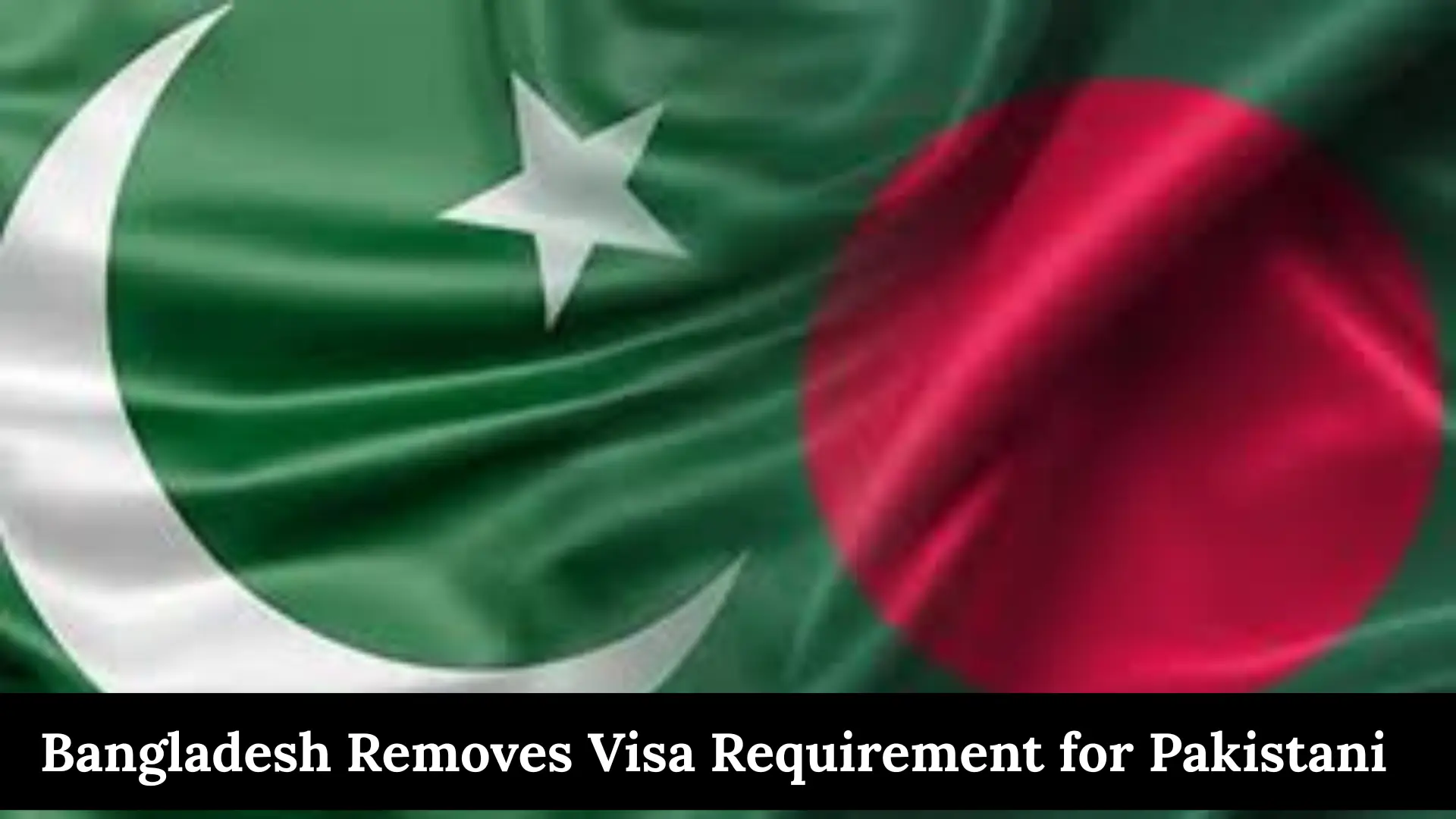
Bangladesh Removes Visa Requirement for Pakistani Officials for First Time Since 1971
Bangladesh Removes Visa Requirement. In a historic diplomatic development, Bangladesh has announced the removal of visa requirements for Pakistani officials holding diplomatic and official passports. This marks the first such move since the Bangladesh Liberation War, which led to the country’s independence.
The agreement reflects a significant improvement in bilateral relations between Pakistan and Bangladesh, signaling a new phase of cooperation after decades of limited engagement.
Mutual Visa Exemption Agreement Approved
The decision was approved by Bangladesh’s interim administration, led by Muhammad Yunus. According to officials, the agreement allows holders of diplomatic and official passports from both countries to travel without the need for a visa.
The visa exemption agreement will remain in effect for five years, offering ease of travel for government officials and diplomats. This move is expected to strengthen communication and coordination between the two nations at official levels.
Bangladesh already maintains similar visa-free arrangements with more than 30 countries, making this agreement a continuation of its broader diplomatic strategy.
Key Meetings Behind the Decision
The agreement follows a series of high-level discussions between officials from both countries. A notable meeting took place in Dhaka between Bangladesh’s Home Adviser Jahangir Alam Chowdhury and Pakistan’s Interior Minister Mohsin Naqvi.
During these talks, both sides discussed enhancing travel arrangements, including plans for visa-on-arrival facilities for official passport holders. These efforts laid the groundwork for the newly approved visa-free travel agreement.
Historical Context: A Long Gap Since 1971
Visa-free travel between Bangladesh and Pakistan had been suspended since 1971, following the independence of Bangladesh after a conflict with Pakistan. Since then, relations between the two countries have experienced ups and downs, with limited diplomatic progress for many years.
The latest agreement marks a significant shift, as both nations appear willing to move forward and rebuild ties despite their complex history.
Improving Bilateral Relations
Relations between Dhaka and Islamabad have shown noticeable improvement in recent months. Analysts link this positive change to political developments in Bangladesh, particularly after the 2024 uprising that led to the fall of former Prime Minister Sheikh Hasina’s government.
The new leadership has adopted a more open approach toward regional cooperation, which has helped create opportunities for renewed engagement with Pakistan.
Economic and Trade Cooperation on the Rise
The strengthening diplomatic relationship is also reflected in growing economic cooperation. Pakistan’s Commerce Minister Jam Kamal Khan recently visited Dhaka for a four-day official trip aimed at boosting trade and economic ties.
The visit highlights both countries’ interest in expanding bilateral trade, exploring new markets, and improving economic partnerships. Easier travel for officials is expected to support these goals by facilitating meetings, negotiations, and joint initiatives.
What This Means for the Future
The visa exemption agreement is more than just a travel policy change—it represents a broader effort to rebuild trust and cooperation between two South Asian nations with a shared history.
By removing travel barriers for officials, both countries are taking a practical step toward improving diplomatic relations, enhancing communication, and promoting regional stability.
Conclusion
The decision by Bangladesh to remove visa requirements for Pakistani officials is a landmark moment in bilateral relations. Coming more than five decades after the events of 1971, this move signals a willingness from both sides to move forward and strengthen ties.
With improved diplomatic engagement, growing economic cooperation, and renewed political will, the future of Pakistan-Bangladesh relations appears more promising than it has in decades.