5 Secrets to Identify Valuable Old Vintage Kitchenware Successfully
Every home has a story, but the historical kitchens of early America hold the warmest memories. When you hold a piece of authentic old vintage kitchenware, you aren’t just holding a dusty cooking pot; you are holding a physical piece of American history. Over the last few years, antique kitchen utensils from the Colonial and Victorian eras have transitioned from simple garage sale items into highly prized, high-value collectibles.
Whether you inherited a heavy pewter pitcher from an estate in New England or stumbled upon a tarnished copper kettle at a flea market in Ohio, understanding the history and value of these objects is key. For American collectors and antique investors, the vintage kitchenware market is booming.
In this comprehensive guide, we will reveal 5 secrets to identifying, valuing, and collecting valuable antique kitchenware successfully.
The Booming Market for Early American Kitchen Antiques
In today’s fast-paced digital world, American homeowners are increasingly craving authenticity. Modern non-stick pans last only a few years before ending up in landfills. On the other hand, old vintage kitchenware was built to survive generations.
Beyond their rustic farmhouse aesthetic, these vintage cooking vessels are highly functional. Many professional chefs actually prefer antique copper and cast iron over modern cookware because of their superior heat distribution.
This unique blend of historical charm, sustainability, and daily utility has created a highly lucrative collector’s market. For website owners, this niche offers exceptionally high CPC (Cost Per Click) ad opportunities, as luxury home decor brands and high-end US antique auctions actively target this specific audience.
Secret 1: Master the Art of Identifying Authentic Colonial Pewter
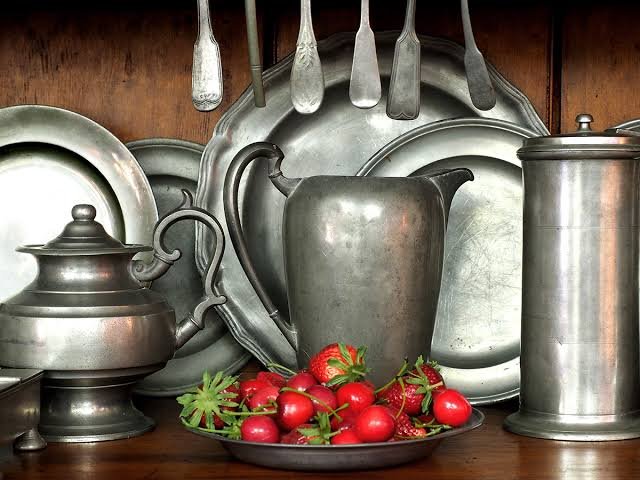
Before the widespread use of glass and ceramic, early American households in the 18th and 19th centuries relied heavily on pewter. Known as “the poor man’s silver,” pewter is an alloy of tin, copper, and antimony.
[Raw Tin & Copper Alloy] ➔ [Cast in Brass Molds] ➔ [Hand-Finished Pewter Ware]
How to Identify Genuine Antique Pewter
Authentic early American pewter has a soft, warm, satin-like luster. It is much softer than silver or modern stainless steel. If a piece looks extremely shiny, bright blue-grey, or feels lightweight, it is likely a modern reproduction. Genuine old vintage kitchenware made of pewter will show signs of gentle wear, minor dents, and a deep, dark grey patina in unpolished crevices.
Spotting “Touchmarks” (The Maker’s Mark)
The most crucial step in valuing antique pewter is finding the “touchmark.” American pewterers of the 18th century, such as William Will or Thomas Danforth, stamped their unique symbols (often featuring eagles, lions, or initials) on the bottom of plates, tankards, and basins. A certified, untouched 18th-century American pewter plate with a clear maker’s touchmark can easily command anywhere from $500 to over $5,000 at US auctions.
Secret 2: Look for Hand-Hammered Details on Antique Copper
If you are looking for the absolute holy grail of old vintage kitchenware, look no further than antique copper. For centuries, heavy-gauge copper pots and kettles have been the ultimate symbol of culinary luxury.
How to Spot Authentic Antique Copper:
1. Thick, Heavy Walls (High-Gauge Metal)
2. Hand-Peened Heavy Copper or Iron Rivets
3. Visible Dovetail Joint Seams
4. Interior Lined with a Dull-Grey Tin Layer
The Signs of Quality Craftsmanship
True vintage copper is exceptionally thick and heavy. Because raw copper reacts chemically with acidic foods, historical pots were always lined on the inside with a thin layer of molten tin. When inspecting a vintage copper pan, look at the handles. Are they attached with massive, hand-hammered iron rivets? If yes, you are likely looking at a high-value piece from the 19th or early 20th century.
Top Brands to Look For
If you find a piece stamped with names like E. Dehillerin, Mauviel, or Gaillard Paris, you have hit the jackpot. These historic French brands are highly coveted. Even a single well-preserved 19th-century copper saucepan from these makers can command high prices on the collector’s market. You can learn more about the history of copper craftsmanship to identify these high-end brands.
Secret 3: Verify the Smoothness of Vintage Cast Iron
Unlike brass and copper, which often serve decorative roles today, vintage cast iron is still actively used on stovetops across the United States.
Why Vintage Cast Iron Beats Modern Cast Iron
If you buy a brand-new cast iron skillet today, you will notice the surface feels rough, like sandpaper. However, old vintage kitchenware made before the 1950s is famous for having an incredibly smooth, glass-like cooking surface. In the old days, manufacturers took the extra step to hand-grind and polish the interior of the pans.
Vintage Smooth Surface (Hand-Polished)  vs.  Modern Rough Surface (Unpolished)
[====================================]       [~~~~~~~~~~~~~~~~~~~~~~~~~~~~~~~~~~]
Key Brands and Logos to Search For
When hunting for vintage cast iron at American estate sales, flip the pan over and look for these highly valued logos:
Griswold: Known by their famous “double-circle cross” logo. A smooth, undamaged Griswold skillet is highly collectible.
Wagner Ware: Famous for their stylized, cursive logo writing.
Erie & Wapak: Older, rarer brands that command top dollar from serious cast iron enthusiasts.
Secret 4: Evaluate the Patina and Surface Wear Wisely
One of the biggest mistakes amateur collectors make is immediately polishing away centuries of history. In the antique world, original condition is everything.
The Power of Patina: A natural, dark, oxidized layer on metals like brass, bronze, and copper acts as a protective seal and proves the item’s age. Removing this patina can slash the item’s value by up to 50%.
Signs of Genuine Age: Look for uneven wear patterns. For instance, the bottom of an old brass kettle should show wear from being placed on iron stove grates or open flames. If the wear is perfectly uniform, be suspicious.
Secret 5: Check the Construction Methods and Joints
Before modern factory welding existed, metal kitchenware was held together by hand. Knowing how these pieces were constructed will help you spot reproductions instantly.
Dovetail Seams: Older copper and brass pieces often feature “cramp joints” or dovetail seams along the side or bottom. These look like interlocking fingers of metal and are a surefire sign of pre-1850 hand-craftsmanship.

Old Vintage Kitchenware Rivets and Handles: Look closely at how the handles are attached. Early American pots used hand-forged, thick iron handles secured with heavy, mushroom-shaped copper rivets. Modern reproductions typically use thin, machine-stamped handles with uniform, flat rivets.
Antique Kitchenware Valuation Checklist
Before listing your items or attempting a restoration, use this quick checklist to estimate their market value:
| Factor | High-Value Indicator | Low-Value Indicator |
| Maker’s Mark | Clear, stamped logo or name | No markings or printed modern logo |
| Interior Lining | Intact tin lining (for copper) | Exposed, green-oxidized copper |
| Surface Finish | Smooth, hand-polished (cast iron) | Rough, bumpy, machine-cast finish |
| Joints | Hand-hammered rivets & dovetail seams | Perfectly welded, seamless joints |
| Damage | Minor surface scratches and patina | Cracks, heavy warping, or deep rust |
Summary: A Beautiful and Smart Investment
Whether you are looking to decorate your home with the warm rustic vibes of old brass or wanting to cook with the finest antique copper, old vintage kitchenware is a beautiful investment. These pieces hold their monetary value incredibly well, and unlike modern kitchen appliances, they will never go out of style.
Next time you see a dark, heavy pot at a local thrift store, don’t walk past it. Pick it up, check its weight, feel its surface, and you might just find yourself holding a valuable piece of culinary history.
Disclaimer (AdSense & Legal Compliance)
Disclaimer: The values, history, and identification tips shared in this article are for informational and educational purposes only. Antique markets fluctuate, and values can vary wildly based on global demand, geographic location, and physical condition. We highly recommend consulting a certified professional antique appraiser before buying, selling, or restoring high-value vintage items.