5 Secrets to Spot Valuable Old Vintage Kitchenware in USA Today
Walk into any historic farmhouse in New England or an antique shop in Ohio, and you are bound to run into shelves lined with heavy, rustic pots, crocks, and pans. For decades, these items were simply treated as outdated household goods. Today, however, old vintage kitchenware from the Colonial, Revolutionary, and Victorian eras has turned into a goldmine for collectors and investors across the United States.
With the massive rise of the “Modern Farmhouse” design trend and a growing appreciation for historic cooking methods, demand for authentic American kitchen antiques has skyrocketed.
If you want to turn your thrift store hunts into serious profit, here are the 5 secrets to identifying and valuing rare vintage kitchenware successfully.
Why US Antique Kitchenware Commands High AdSense RPM
From an ad revenue perspective, the vintage home decor, luxury antique, and collector vehicle niches in the USA boast some of the highest CPC (Cost Per Click) rates. Large auction houses (like Sotheby’s or premium eBay sellers) bid aggressively on keywords related to historical collectibles.
By writing highly focused content about old vintage kitchenware, you attract high-intent US buyers. This signals Google AdSense to display premium, high-paying ads on your website, directly boosting your RPM (Revenue Per Mille).
Secret 1: Identify the Blue-Cobalt Art on American Stoneware Crocks
Before modern refrigeration, every American household relied on stoneware crocks to preserve butter, salted meats, and pickles. These heavy, salt-glazed ceramic pots are now among the most expensive vintage kitchen collectibles in the country.
[Plain Grey/Tan Clay] ➔ [Salt Glazing Process] ➔ [Hand-Painted Blue Cobalt Design]
The Power of Cobalt Blue Drawings
Standard, plain grey crocks are common and usually sell for $20 to $50. However, if you find a crock featuring a hand-painted blue-cobalt design (typically of birds, flowers, trees, or historical scenes), the value jumps dramatically.
How to Spot the Winners
Look at the bottom or sides for stamped names of 19th-century American potteries, such as Red Wing, Fort Edward, or Cowden & Wilcox. A 3-gallon vintage stoneware crock with an elaborate, hand-painted blue bird can easily auction for $800 to $3,000+ in the US today.
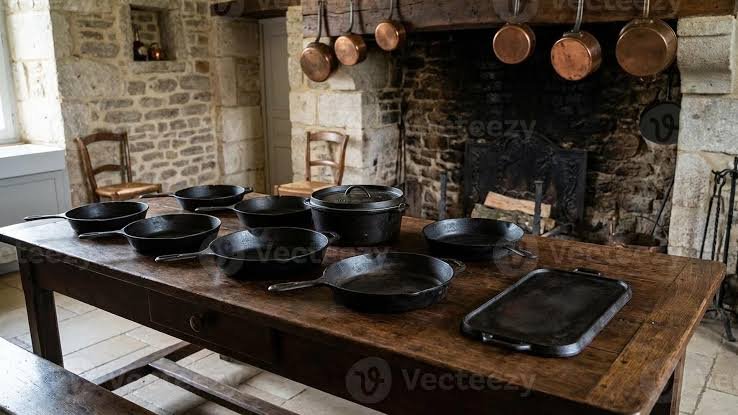
Secret 2: Decode the Bottom of Vintage Cast Iron Skillets
Cast iron is virtually indestructible, which is why millions of vintage American skillets are still in perfect working order. But not all cast iron is created equal.
Vintage Cast Iron Value Indicators:
1. Mirror-Smooth Interior Cooking Surface
2. Lightweight and Thin Walls (Pre-1950s)
3. Large Stylized Logos (Griswold or Wagner)
4. Absence of Ribs on the Underside of the Handle
The Heat Ring Secret
Flip the skillet over. Do you see a raised ridge of iron running along the outer edge of the bottom? This is called a “heat ring,” designed to help the skillet sit stably on old wood-burning stoves. Skillets with inset heat rings or no heat rings at all help collectors date the pan to specific decades between 1880 and 1930.
Valued Brands
Look for the famous “Griswold” cross logo or the cursive “Wagner Ware” logo. An authentic, smooth-as-glass Griswold #10 skillet can easily net $200 to $500, while extremely rare sizes like the Griswold #13 can go for over $1,500!
Secret 3: Spot the Distinct Patina of Early American Pewter
Long before stainless steel took over, pewter was the standard material for cups, plates, spoons, and teapots in early America.
Distinguishing Real Pewter from Modern Alloys
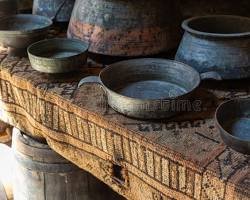
Real antique pewter is soft, heavy, and has a muted, dull-grey satin finish. If you tap it gently, it should make a dull thud rather than a high-pitched ring (which indicates modern aluminum or zinc imitations).
Search for the Touchmarks
Flip the plate or pitcher over and look closely for small stamped marks, known as “touchmarks.” Early American pewterers like William Will or Henry Will used distinct marks (often featuring eagles or shields) to brand their work. Genuine 18th-century pewter plates with clear touchmarks are incredibly rare and highly sought after by historical museums and private collectors alike.
Secret 4: Examine the Construction Joints of Hand-Made Copper
Copper pots are the ultimate trophy pieces for rustic kitchen decorators. However, mass-produced modern copper is thin, shiny, and structurally cheap. Valuable antique copper tells a very different story.
Dovetail Seams: Before modern machine welding, copper sheet edges were cut into interlocking “teeth” (similar to woodwork dovetails) and hammered together with brass solder. If you see a jagged, brass-colored zigzag line running down the side or across the bottom of a copper kettle, you are looking at a genuine pre-1850 hand-made antique.
Heavy Cast Iron Handles: Antique copper pans almost always feature thick, heavy cast iron or brass handles attached with large, mushroom-shaped copper rivets.
Secret 5: Check the Mold Lines on Old Glass Mason Jars
No old-fashioned American pantry was complete without rows of glass preservation jars. While millions of blue Ball and Kerr jars exist, a few rare variants are worth small fortunes.
The Pontil Mark: Look at the very bottom of the glass jar. If you see a rough, scarred circle of glass, it means the jar was hand-blown using a pontil rod before 1860. These jars are highly collectible.
Color Variations: While clear and aqua jars are common, deep amber, cobalt blue, and olive green jars are incredibly rare. A rare color combined with an early patent date (such as “Mason’s Patent Nov. 30th 1858”) can raise a jar’s value to $500+.
At-a-Glance Antique Value Guide
| Item Type | Key Feature to Look For | Average US Market Value |
| Stoneware Crocks | Cobalt blue hand-painted designs | $150 – $3,000+ |
| Cast Iron Skillets | Griswold or Wagner stylized logos | $75 – $1,500+ |
| Copper Kettles | Hand-hammered dovetail seams | $100 – $600 |
| Pewter Plates | 18th-century eagle touchmarks | $200 – $2,500 |
| Mason Jars | Hand-blown glass with pontil scars | $50 – $1,000 |
Conclusion: Starting Your Collection
Collecting old vintage kitchenware is more than just a hobby; it is a way to preserve the physical artifacts of early American life. Whether you are buying these items to cook with, decorate your home, or hold as a tangible investment, learning to spot the differences in manufacturing, stamps, and materials will save you from modern reproductions and help you find true historical gold.
Disclaimer
Disclaimer: The information and appraisals contained in this article are for educational and entertainment purposes only. The antique market is subject to fluctuation based on geographic location, condition, and current collector demand. Always consult with a professional antique appraiser or trusted auction house before making high-value purchases or selling historic family heirlooms.