I Opened a Brand-New Pack of Cigarettes—What I Found Was Unexpected
At first, it barely registered as anything unusual.
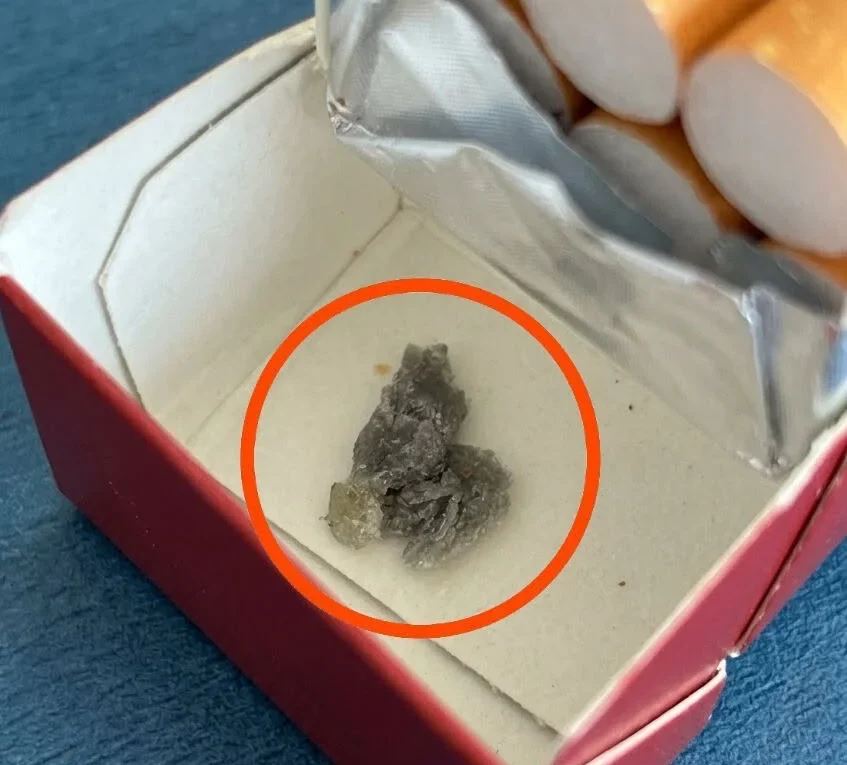
I opened the cigarette pack like I always did, expecting nothing out of the ordinary. Everything looked normal at a glance. But then, just as I was about to take one out, something odd caught my attention inside the lid.
There it was—a small, strange-looking lump tucked into the corner, almost as if it belonged there. Except the more I focused on it, the less “normal” it seemed.
It wasn’t shaped like tobacco. It wasn’t loose or crumbly like the rest of the contents. Instead, it looked compressed, almost fused together, like it had been exposed to heat or pressure at some point. The color stood out immediately too—dull gray mixed with a faint greenish tint, nothing like the usual warm brown tones of dried tobacco. Even the texture looked different. Slightly glossy, almost sticky, as if it had hardened while still soft.
Naturally, that’s when my mind started running through possibilities.
Was it mold? Contamination? A manufacturing defect? Or something that simply wasn’t meant to be there at all?
The pack had been sealed when I bought it, which made the situation feel even more confusing. If it wasn’t opened, how could something unusual form inside like that? I checked the rest of the cigarettes carefully, expecting to find more of the same. But everything else looked completely normal—no discoloration, no odd textures, no strange smell. Just that single, isolated lump sitting in the lid like an out-of-place detail in an otherwise normal picture.
At that point, curiosity turned into concern. It’s easy for the mind to escalate small uncertainties into bigger fears, especially when something looks unfamiliar. I even considered discarding the entire pack just to avoid taking any chances.
Instead, I decided to look into it a bit further.
After some searching and comparing similar experiences shared by others, a clearer explanation started to emerge. In some cases during cigarette manufacturing, fine tobacco particles can become loose during processing. These particles may combine with trace amounts of adhesive used in packaging materials. Under pressure, vibration, or slight heat exposure during storage and transport, those materials can clump together and harden into irregular formations.
When trapped in small spaces like a pack lid, they can appear more noticeable and unusual than they actually are—simply because of how concentrated and compacted they become.
So what initially looked alarming and out of place turned out to be something far more ordinary: a compressed clump formed from tobacco dust and packaging residue during the production process.
No hidden issue. No contamination crisis. Just an odd byproduct of manufacturing that happened to look far more dramatic than it actually was.
Still, the experience was a reminder of how quickly the mind fills in gaps when something unexpected appears in a routine moment.
Have you ever come across something strange in everyday products that turned out to have a simple explanation? Share your experience below and join the conversation.
Website Disclaimer
The information provided on this website is for general informational and educational purposes only. While we strive to ensure that all content is accurate and up to date, we make no guarantees regarding the completeness, reliability, or accuracy of any information published.
The views and opinions expressed in articles belong to their respective authors and do not necessarily reflect the views of this website. Any action you take based on the information found on this website is strictly at your own risk. We will not be liable for any losses, damages, or inconveniences arising from the use of our content.
Some articles may contain opinions, third-party information, or external links. We do not endorse or guarantee the accuracy of content on external websites and are not responsible for their practices or policies.
All content on this website is provided in good faith and is intended for informational purposes only. Readers are encouraged to verify information independently and seek professional advice where appropriate.