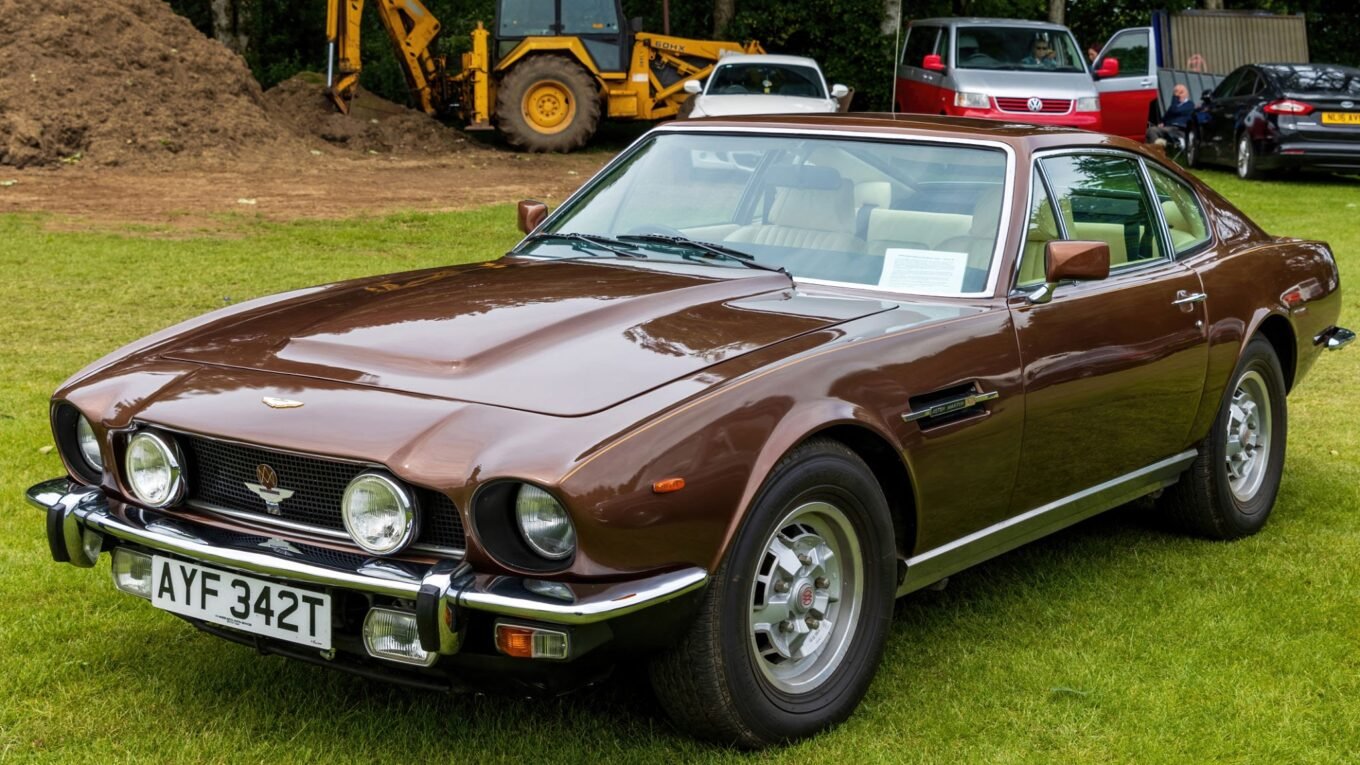
The Ultimate Classic Aston Martin V8 Vantage Buyers Guide: Britain’s First True Supercar
When it comes to vintage motoring, few names evoke the same level of raw power, hand-crafted elegance, and cinematic heritage as Aston Martin. Introduced in 1977, the Aston Martin V8 Vantage shook the automotive world. At a time when emission regulations were strangling performance, Aston Martin delivered a muscle-bound machine that could out-accelerate a Ferrari Daytona and run circles around contemporary Porsches.
Today, this iconic British brute is one of the most sought-after collector cars on the global market. Whether you are an automotive enthusiast or a savvy investor looking for a high-yield tangible asset, this comprehensive buyers guide explores the history, specifications, investment potential, and key restoration risks of the classic Aston Martin V8 Vantage.
1. The Birth of Britain’s First Supercar
To understand the appeal of the V8 Vantage, one must look at the era of its birth. In the mid-1970s, the automotive industry was struggling with oil crises and tightening emissions standards. Muscle cars were losing their teeth, and supercars were becoming overly complex.
Aston Martin decided to go in the opposite direction. Taking their standard V8 saloon, they retuned the massive 5.3-liter engine, bolted on high-performance parts, and created a package that earned the title of “Britain’s First Supercar.” It offered a top speed of 170 mph (274 km/h) and a 0–60 mph time of just 5.2 seconds—figures that were mind-boggling for a heavy, luxurious four-seater grand tourer in 1977.
2. Technical Specifications: The Beast Under the Hood
The heart of the V8 Vantage is its hand-assembled engine. Each power unit was signed by the specific engineer who built it, adding a level of bespoke luxury that modern assembly lines cannot replicate.
| Feature | Specification |
| Engine Type | 5.3L (5340cc) Quad-cam V8 |
| Fuel System | Quad Weber 48 IDF Carburetors |
| Power Output | ~380 bhp to 430 bhp (X-Pack models) |
| Transmission | 5-speed ZF Manual / 3-speed Torqueflite Auto |
| 0-60 mph (97 km/h) | 5.2 to 5.4 seconds |
| Top Speed | 170 mph (274 km/h) |
Aerodynamic and Styling Upgrades
To handle the immense power and high speeds, Aston Martin made several distinct aesthetic and aerodynamic modifications that set the Vantage apart from the standard V8:
Blocked-off Grille: Since the radiator did not need the traditional open grille at high speeds, it was sealed with a blanking plate housing twin driving lights.
Deep Front Air Dam: Designed to reduce front-end lift at speeds exceeding 100 mph.
Rear Spoiler: A flipped-up “ducktail” spoiler was integrated into the boot lid to improve high-speed stability.
Bulging Bonnet: A sealed bonnet bulge was added to clear the massive air box feeding the oversized Weber carburetors.
3. The Evolution: Series and Special Models
Over its production run from 1977 to 1989, the V8 Vantage went through several evolutionary phases. Knowing these differences is critical for collectors, as they heavily influence market value.

The “Bolt-On” and “Flip-Tail” Early Cars (1977–1978)
The earliest V8 Vantages featured a rear spoiler that was bolted on rather than molded into the bodywork. These “bolt-on” and “flip-tail” cars are incredibly rare, with only a handful ever made. They command a massive premium at auctions today due to their historical significance.
The Oscar India Series (1978–1986)
In late 1978, Aston Martin introduced the “Oscar India” (OI) specification. The rear spoiler was now neatly integrated into the bodywork, and the bonnet bulge was smoothed out. Inside, the cabin received luxurious wood veneers (often walnut) replacing the black vinyl dashboard of the earlier cars, making it a true luxury cruiser.
The Ultimate “X-Pack” Vantage (1986–1989)
For many collectors, the pinnacle of the range is the final evolution: the V8 Vantage X-Pack. Equipped with high-compression Cosworth pistons, larger inlet valves, and massive Weber carburetors, this monster produced a massive 432 bhp. It remains the ultimate expression of raw British horsepower.
4. Investment Potential and Market Trends
The classic car market has increasingly behaved like an alternative asset class, similar to fine art or luxury watches. Within this space, the Aston Martin V8 Vantage has shown remarkable resilience and steady growth.
Classic Car Market Cycle:
[Discovery Phase] ➔ [Rapid Appreciation] ➔ [Market Stabilization] ➔ [Blue-Chip Asset Status]
                                                                        ▲
                                                      (V8 Vantage sits firmly here)
Why Values Are Rising
Extreme Rarity: Unlike modern supercars produced by the thousands, only around 300 to 500 genuine V8 Vantage Coupes (excluding Volantes) were built over a 12-year period.
Analog Driving Experience: In an era of digital driver aids, electric power steering, and quiet engines, collectors are paying a premium for the physical, analog connection of a heavy clutch, manual gearbox, and roaring V8 carburetors.
The Bond Effect: The V8 Vantage famously starred alongside Timothy Dalton in the 1987 James Bond film The Living Daylights. This cultural cachet ensures global desirability that transcends typical automotive circles.
5. What to Look For When Buying (Restoration Risks)
Buying a vintage Aston Martin is not like buying a used modern sports car. A poorly maintained example can easily drain your bank account, as parts and specialized labor are incredibly expensive.
Crucial Buying Tip: Never purchase a V8 Vantage without a pre-purchase inspection (PPI) conducted by an established Aston Martin specialist.
Rust and Corrosion
While the outer body panels are made of hand-formed aluminum, they are mounted on a steel chassis and platform. Water can get trapped between the aluminum and steel, causing galvanic corrosion. Check the following areas thoroughly:
Sills (chassis outriggers)
Radius arm mounting points
A-posts and B-posts
The steel floor pan and boot floor
Engine Health and Maintenance
The hand-built V8 engine is bulletproof if maintained, but catastrophic if neglected. Look for a comprehensive service history detailing regular oil changes and valve adjustments. Watch out for oil smoke on startup (indicative of worn valve guides) and check the coolant for signs of head gasket failure.
6. Conclusion: Is It Worth the Premium?
The classic Aston Martin V8 Vantage is more than just a vintage car; it is a rolling piece of art, a mechanical masterpiece, and a solid financial investment. While maintenance costs are admittedly high, the sheer thrill of driving Britain’s first supercar—coupled with its blue-chip investment status—makes it one of the most rewarding classic cars you can own today.
If you have the means to acquire and maintain one, the V8 Vantage offers an unmatched blend of muscle, class, and exclusivity.
Disclaimer (For AdSense & Legal Compliance)
Disclaimer: The information provided in this article is for educational and entertainment purposes only. Classic car values can fluctuate dramatically based on market conditions, vehicle history, and restoration quality. This article does not constitute professional financial or investment advice. Always consult with a certified automotive specialist and financial advisor before making any high-value luxury purchases.